
The Slot That Changes the Conversation
Let me be direct about what happened. When Lovebites stood on the Wacken Open Air main stage, they weren’t filling a novelty slot. They weren’t a curiosity billed beneath the real acts. They were there because a trajectory that started long before any of us were writing about Japanese metal had finally produced something undeniable — a band good enough that the gatekeepers ran out of reasons to say no.
That matters, because the history of Japanese metal in Europe has always been a negotiation between quality and visibility. The quality was rarely the problem.
The Long Road Before Lovebites
Go back to Loudness. Their mid-1980s push into the Western market — headlining European tours, the American major-label run — was genuinely radical for the era, and it set a template: prove yourself in North America or Europe first, then watch how Japan’s own industry responds. That inversion is strange and worth sitting with. Japanese bands have historically needed foreign validation to unlock full-scale domestic respect. Loudness understood this instinctively. The roadmap they drew is still being used.
The 1990s changed the geography. Visual kei acts found passionate European fanbases, largely through tape trading and early internet forums, and suddenly small venues in Germany and France were full of people who’d never set foot in Japan but knew every word. That wasn’t industry-driven. It was fan-driven, which meant it was real in a way that marketing budgets can’t manufacture. Bands like Dir en grey and Malice Mizer had European cult status before any promoter with actual capital started paying serious attention. The infrastructure came second. The devotion came first.
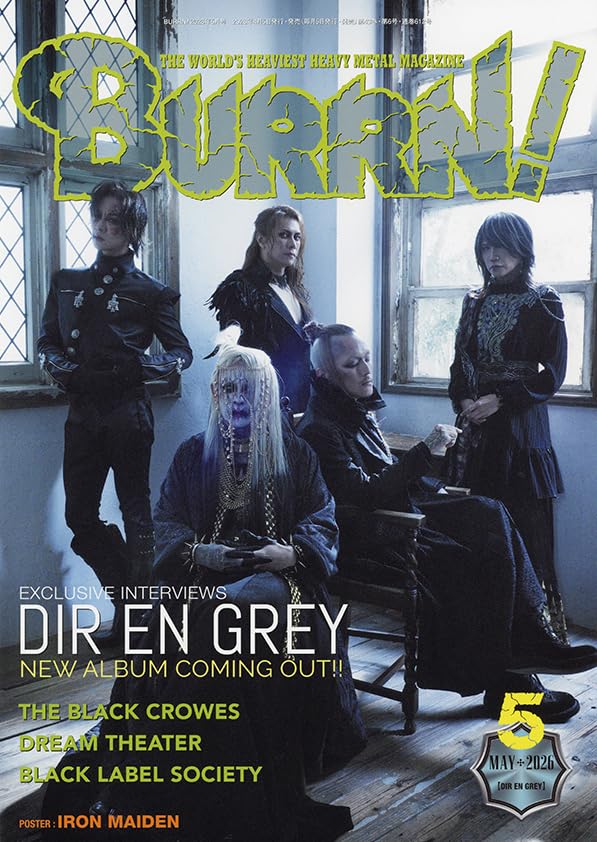
Dir en grey is worth dwelling on specifically. Their touring arc through Europe — grinding it out over years, shifting sound, earning credibility with audiences who had zero attachment to the visual kei aesthetics that first brought them overseas — showed that a Japanese band could build a European metal career through the same mechanism anyone else uses. Consistency. Presence. Not a single landmark moment but accumulated weight. By the time they were sharing stages with acts from Scandinavia and the US at mid-tier European festivals, the question of whether Japanese metal belonged had quietly stopped being a question.
Which brings us back to Wacken, and to what makes Lovebites different.
Why the Main Stage Is the Argument
Wacken isn’t just large. It’s the symbolic center of traditional heavy metal’s global self-image — a German field that functions as a kind of annual referendum on what the genre considers itself to be. Getting booked there is one thing. Getting main-stage placement is the festival telling its own audience: this is the real thing, treat it accordingly.
Lovebites earned that by doing something Japanese metal has periodically tried and rarely sustained: playing European-style melodic heavy metal at a level that competes on the genre’s own terms, not on the novelty of origin. The riffs don’t have an accent. The arrangements don’t wink at you. If you closed your eyes and heard them on a playlist between Swedish and Finnish acts, you’d just hear a great heavy metal band. That’s exactly the point. That’s the structural thing.
And honestly, the fact that the band is all women matters here in ways the metal press doesn’t always articulate cleanly. Wacken’s audience skews older and more conservative in its genre preferences. Getting that crowd invested — not as a spectacle, but as believers — is its own form of persuasion. Lovebites didn’t soften anything to get there.
The European festival “Japan slot,” to the extent it ever existed as a category, was always a ceiling with a trapdoor. Lovebites found the trapdoor. The bands coming after them are going to find a different room on the other side.