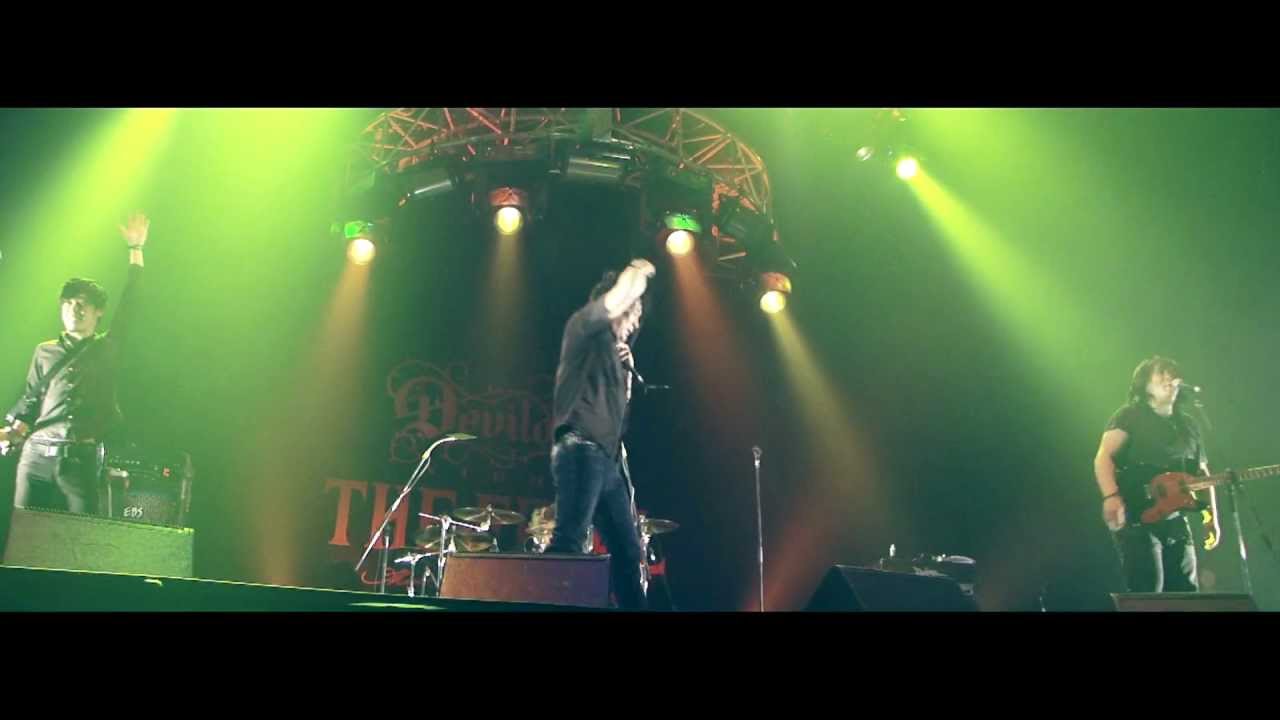
From the late 1980s into the early 1990s, Japanese popular music was riding high on a major-label band boom and the first wave of visual kei. Behind that glittering commercial stage, the most extreme sounds of the era — sharpened-to-a-point thrash metal, hardcore punk, grindcore — were being half ignored by the existing distribution system and left pooling in the underground live-house circuit.
The decisive charge that blew that structural deadlock open, and pushed Japanese extreme music toward a world-standard independent business, was a label founded in 1990: HOWLING BULL (Howling Bull Records). Its founder was Shigeru “Geess” Kosugi, the former vocalist of DEMENTIA, and what he built went well beyond an indie record company. HOWLING BULL created the concept of “loud rock” that dissolved genre borders, developed Hi-STANDARD and incubated PIZZA OF DEATH RECORDS, and laid the foundations for large-scale festivals including AIR JAM, BEAST FEAST and LOUD PARK. Its historical impact on Japan’s metal and street-music scenes was vast, and it cannot be undone.
Origins and Aesthetics: The Logic of Independence
Geess Kosugi’s Starting Point
To understand what HOWLING BULL was founded to do, start with its founder. In the mid-1980s Kosugi was on stage as frontman of DEMENTIA, one of the bands that carried the dawn of Japan’s underground thrash scene. Based at Kagurazaka EXPLOSION and Meguro Rokumeikan, DEMENTIA — alongside X (later X JAPAN) and Yokosuka’s SAVER TIGER — was branded one of “Kanto’s Three Great Bulky-Garbage Bands” for its extreme stagecraft and after-show parties of unheard-of violence, and it stirred up a fervour all its own.
After DEMENTIA ended, Kosugi left the front line of music and went to work at an advertising agency. He picked up real business skills there — writing proposals, copywriting — but he struggled to adapt to life inside an organisation and ran into a crisis of identity. In the middle of that confusion, one story kept coming back to him: Johnny Z (Jon Zazula), founder of America’s Megaforce Records, who had mortgaged his own home to fund the recording of Metallica’s first album, Kill ‘Em All. At that time in Europe and America, independent labels devoted to specific extreme genres were springing up one after another, sending cutting-edge music that the majors couldn’t absorb out into the world through their own communities.
The Trigger: UNITED and Japan’s First Extreme-Music Label
In the Japanese thrash scene of the late 1980s, Nagoya’s OUTRAGE and the uncanny trio DOOM had been quick to land major-label deals and stand out. Meanwhile, plenty of bands with first-rate playing and real live draw were being left behind, with no chance to put out a full album with national distribution. First among them was UNITED, formed in 1981.
Kosugi felt a fierce sense that something was wrong: UNITED’s world-class speed, the razor-sharp picking of their twin guitars and their solid forward drive were not being taken up by the commercial frameworks of the major labels. Rather than settle into managing a single band, he wanted a platform that would make UNITED the absolute magnetic core, consolidate Japan’s thrash scene itself into one solid collective, and hurl it at the world. In July 1990 he founded HOWLING BULL (it was incorporated in March 1994).
The label’s landmark first release in 1990, catalogue number HBR-F0001, was UNITED’s first full-length album, Bloody But Unbowed. It became a monument of Japanese independent thrash, and the first firm step for a domestic label devoted to sheer volume.
The Catalogue, and the Birth of “Loud Rock”
Sharpening and Documenting Japanese Thrash
In its early years HOWLING BULL concentrated completely on recording Japan’s serious thrash and speed metal. After UNITED came a run of releases by the elite bands holding up the underground scenes of Tokyo, Nagoya and Osaka: SACRIFICE, SHELLSHOCK, LAWSHED and WARPIGS. The label’s production approach — rejecting outright the over-commercial, crowd-pleasing production that major-label money tends to bring, and sealing a band’s natural ferocity and raw dynamics onto CD as they were — earned it enormous trust among hardcore fans. It also handled distribution and releases for pioneers of Japanese extreme metal such as JURASSIC JADE, serving as an important archive of the history of Japanese underground heavy metal.
Embracing Crossover and Naming “Loud Rock”
In the early 1990s the huge tide of grunge and alternative rock swept through heavy music worldwide, and the strict borders once drawn between old-school metal and punk and hardcore collapsed fast. HOWLING BULL picked up on that shift early and signed GARLIC BOYS, the Osaka band that fused skateboard culture with high-speed thrash and hardcore through a sense of humour all their own. GARLIC BOYS’ arrival instantly widened the label’s musical range into street culture, punk and mixture.
Rather than splintering metal, hardcore punk, grunge and alternative rock into narrow sub-genres set against one another, Kosugi actively put forward “loud rock” as an umbrella concept for the aggressive energy running beneath all of them, and made it stick with the media and the market. The term later spread as a standard category in Japanese music journalism and in record shops, and it had a decisive influence on the identity of the country’s heavy music scene.
| Period | Key artists and releases | Main sound / sub-genres | Historical significance for the label and the scene |
|---|---|---|---|
| Early 1990s | UNITED, SACRIFICE, SHELLSHOCK, LAWSHED | Thrash metal, speed metal | Established the foundation of Japan’s first independent label devoted to thrash |
| Mid 1990s | GARLIC BOYS, Hi-STANDARD, NUNCHAKU | Hardcore, melodic punk, crossover | Fusion with skate and street culture; drove Japan’s second indie boom |
| Late 1990s – early 2000s | YELLOW MACHINEGUN, PULLING TEETH, SURVIVE | Alternative metal, grind/thrash | International rise of an all-female trio; deepening of Japanese extreme metal |
| Mid 2000s – 2010s | EACH OF THE DAYS, GYZE (now RYUJIN), PHANTOM EXCALIVER | Metalcore, melodic death metal, speed metal | Nurtured the next generation of Japanese metalcore; global push for bands using traditional Japanese elements |
The Incubator: PIZZA OF DEATH and Street Infrastructure
Incubating PIZZA OF DEATH, Then Letting It Go
The episode in HOWLING BULL’s history that rewrote the structure of the Japanese music industry from the ground up was taking on the management of Hi-STANDARD, and running and developing the label-within-a-label PIZZA OF DEATH RECORDS.
In 1993 Hi-STANDARD had signed with an indie label and finished recording a mini-album, but the label ran into financial trouble and the release was postponed indefinitely. A Toy’s Factory affiliate that was consulted bought the master, and the mini-album Last Of Sunny Day came out through independent distribution in the summer of 1994. The label name devised for convenience on that release was PIZZA OF DEATH RECORDS.
HOWLING BULL, led by Kosugi, then took on Hi-STANDARD’s management, and from 1996 PIZZA OF DEATH was properly reorganised as a label under the HOWLING BULL umbrella. With HOWLING BULL’s backing, PIZZA OF DEATH released not only Hi-STANDARD’s own work but a string of rising melodic hardcore and punk bands — SUPER STUPID, HUSKING BEE, THUMB, SHERBET — pushing a youth culture born underground into a huge social phenomenon.
In January 1999, Hi-STANDARD, with Ken Yokoyama at its centre, spun PIZZA OF DEATH out as a fully independent company, securing its own distribution network and complete self-management of both its expression and its rights. The landmark album released that year, MAKING THE ROAD, became a million-seller despite coming out on an independent label. HOWLING BULL had carried the heavy responsibility of acting as a structural incubator: a place where cutting-edge bands with an unshakeable DIY spirit could build a self-sustaining ecosystem and reach the commercial and cultural summit without falling under the control of major-label capital. (How AIR JAM and Hi-STANDARD shaped a generation is its own story.)
ROTTEN ORANGE and the Sharpening of Extreme Hardcore
While Hi-STANDARD was building a monument of melodic punk, HOWLING BULL set up a sub-label, ROTTEN ORANGE, together with GARLIC BOYS guitarist Larry, to pursue a more extreme and heavyweight sound. ROTTEN ORANGE released work by NUNCHAKU, who rose out of the hardcore scene of Kashiwa in Chiba and won a fanatical following with crushingly heavy metallic riffs and their own distinctive Japanese lyrics, and by YELLOW MACHINEGUN, an all-female trio with overwhelming speed and sound pressure.
YELLOW MACHINEGUN in particular drew rave praise from top musicians abroad — Slayer’s Kerry King and Jeff Hanneman, Soulfly’s Max Cavalera, Slipknot, and S.O.D.’s Scott Ian — toured Europe and America successfully, and won recognition on a global scale.
EAT Magazine: Breaking the Information Blockade
In 1994 HOWLING BULL launched EAT Magazine, a street-music magazine designed to report on, and spread the word about, its own artists and the extreme scene spreading out around them. The big music magazines of the day depended on advertising from the major record companies and gave priority to uniform artists and mainstream-leaning rock. EAT Magazine, by contrast, was quick to run features on a new generation of heavy music — KoRn, Limp Bizkit — and on the front line of death metal, hardcore and grindcore at home and abroad. Blending the passion of a fanzine that carried the raw heat of the scene with a sharp street sensibility, it offered listeners a new way of hearing music and worked as an essential piece of media infrastructure linking record shops and live houses.
Two-Way Globalisation: Howling Bull America and Metal Blade Japan
HOWLING BULL’s foresight wasn’t limited to opening up the domestic scene. It showed just as clearly in building international networks that connected Japan directly to the undergrounds of Europe, America and Asia.
| Area of business | Base / main partner | Artists handled / main achievements | Structural significance and market results |
|---|---|---|---|
| North American subsidiary | Howling Bull America (USA) | UNITED, GARLIC BOYS, NUNCHAKU, Hellchild, Bongzilla, Spaceboy | Opened North American distribution for Japanese extreme music, with local releases |
| Partnership with a major overseas label | Metal Blade Records (USA) | DEVILDRIVER, DESTRAGE, SLAYER (paper-sleeve reissues), Cannibal Corpse, As I Lay Dying | Ran “Metal Blade Japan” under contract, ensuring a steady supply of global metal classics and new releases |
| Licensing European and American indie releases | Various European and US labels | August Burns Red, Heaven Shall Burn, Between the Buried and Me, Caliban, Sick of It All | Brought the 2000s metalcore and new-school hardcore wave into the Japanese market immediately |
| Mutual ties across Asia | Taiwan’s independent scene | CHTHONIC | Linked Taiwanese metal culture with Japan’s loud scene; encouraged appearances at each other’s festivals |
Howling Bull America and the Push Overseas
In 1999, facing the change in the size of the business that came with Hi-STANDARD’s independence, Kosugi looked for the next frontier and set up a US subsidiary, Howling Bull America. It distributed releases directly into the North American market through local independent channels: UNITED’s North American album Distorted Vision (2001), GARLIC BOYS’ Poem, NUNCHAKU’s compilation Best of 1993–1998, a split release by Hellchild and more. It also worked with the American sludge/stoner band Bongzilla, attempting two-way distribution. In a market dominated by giant American distributors this was a challenge with serious financial risk, but laying down a direct route from Japanese extreme bands to Western listeners was a major achievement.
Running Metal Blade Japan
From the 2000s on, HOWLING BULL rapidly strengthened its alliances with powerful labels overseas. The high point was running “Metal Blade Japan” under contract in partnership with Metal Blade Records, one of America’s most storied metal labels. Through that project it supplied Japanese editions — with careful lyric translations, liner notes and bonus tracks — of DevilDriver, Destrage, As I Lay Dying, Cannibal Corpse and others. It also reissued Slayer’s classic early albums in paper-sleeve editions, offering high-quality packaging to meet the demands of Japanese collectors and metal fans.
It went further, taking on Japanese releases for front-line metalcore, melodic death metal and hardcore bands from Europe and America — August Burns Red, Heaven Shall Burn, Caliban, Between the Buried and Me, Sick of It All — and powerfully driving the modernisation of Japanese heavy music in the 2000s.
Its Japanese distribution for the Taiwanese black metal band CHTHONIC, and its support for their Japan shows, deserve special mention. The deal grew out of exchanges through Taiwan’s Formoz Festival, and by introducing to Japan a metal sound built on Taiwanese history and traditional instruments, HOWLING BULL left a large footprint in building an extreme-metal network across Asia.
Creating the Mega-Festival: AIR JAM, BEAST FEAST and LOUD PARK
One of HOWLING BULL’s biggest industrial achievements was its transformative power as a festival producer, raising the underground culture of the live houses to arena-scale events.
AIR JAM and the Street-Culture Explosion
At the outdoor festival AIR JAM ‘97, held in August 1997 at Odaiba’s Rainbow Stage, and at AIR JAM ‘98 the following year at Tokyo Bayside Square, Kosugi — together with Hi-STANDARD — gave the festival its name and, as planner, producer and promoter, shouldered the risk and led on the ground. Where Japanese rock festivals until then had been run by the big established promoters, AIR JAM was a celebration of a new culture made by young people themselves, in which skateboarding, BMX, street fashion and independent punk and loud rock were inseparably bound together. With tickets held down to a low ¥1,980, it pulled more than ten thousand people into a whirlwind of excitement and decisively rewrote the history of Japanese street youth culture. I was in that crowd at Rainbow Stage on 30 August 1997, and NUNCHAKU hit exactly as hard in person as you’d hope — then harder.
BEAST FEAST: Japan’s First Arena-Scale Heavy Rock Festival
After creating the frenzy of AIR JAM, Kosugi turned back to where he had started: heavy metal and extreme music. At the time, the industry sneered that a festival leaning toward one particular extreme, heavy genre would inevitably flop in Japan’s pop market. To overturn that prediction, HOWLING BULL teamed up with CLUB CITTA’ and others to stage BEAST FEAST 2001 at Yokohama Arena in August 2001.
Slayer and Pantera co-headlined BEAST FEAST 2001, with giants from around the world alongside them: Machine Head, Sepultura, Morbid Angel, Biohazard, The Dillinger Escape Plan. From Japan, UNITED, YELLOW MACHINEGUN, COCOBAT and BAT CAVE took the stage and went toe to toe with the overseas acts. Drawing around ten thousand metalheads a day, twenty thousand over two days, the event proved that a standalone arena show of extreme music could work in Japan — a historic turning point.
One historical fact stands out above the rest. The band’s set at BEAST FEAST on 26 August 2001 turned out to be the final live performance by Pantera’s classic lineup — Dimebag Darrell, Vinnie Paul, Phil Anselmo and Rex Brown. Soon afterwards, the September 11 attacks in the United States led to the cancellation of their European tour, and the band went on hiatus and then broke up. The night at Yokohama Arena that HOWLING BULL brought into being out of sheer passion ended up inscribing a defining final chapter of world metal history in Japan.
In December 2002 the festival moved to Makuhari Messe for BEAST FEAST 2002, with Motörhead and Killswitch Engage among the performers. The know-how and energy of BEAST FEAST were carried on into LOUD PARK, Japan’s largest metal festival, launched in 2006 by Creativeman with Kosugi involved as the one who named it — and they became the direct foundation of Japanese metal infrastructure through the 2000s and 2010s. (Our look at what the foreign press saw at LOUD PARK is here.)
From Noise to Mental Health, and Passing On the Oral History
The Crisis Behind the Volume, and a Turn to Psychology and Coaching
From the mid-2000s onward, Kosugi’s work moved into territory with no precedent in the music industry. Managing and producing more than two hundred cutting-edge artists, he had watched again and again as performers chasing expression to its absolute limit were worn down mentally by crushing pressure, friction in relationships and a shaken sense of self — and lost their talent along the way.
Driven by a bitter sense of powerlessness — that building structures and business opportunities alone could not save an artist’s soul — Kosugi began seriously studying psychotherapy in 2005. He learned the fundamentals and practice through Sophia University’s counsellor training course and became a certified counsellor of the Japanese Association of Counseling Science. He went on to earn trainer certifications from American NLP (neuro-linguistic programming) and hypnotherapy associations, and expanded his work into mental-health support and coaching for sensitive artists and management staff, and into university lectures on management psychology. The shift might look unrelated to heavy metal, but at its core it was the honest outcome of an independent producer who had spent years standing beside artists who make a living from screaming at the extremes.
The Present, and the Oral History
Through the 2010s and beyond, HOWLING BULL continued to release work by rising Japanese metal acts — GYZE (now RYUJIN), the melodic death metal and “samurai metal” band from Hokkaido, and PHANTOM EXCALIVER — supporting the scene’s next generation.
In recent years Kosugi has been energetically building an oral-history archive through his official YouTube channel, HOWLING BULL ⚡︎ GEESS KOSUGI’s Bakuon Chronicle, and platforms such as note, systematically recording and sharing first-hand information about the turbulent years of Japanese metal, hardcore and loud rock in the 1980s and 1990s — information that only someone who was there could know.
Conclusion: An Irreversible Turning Point in Japanese Heavy Music
HOWLING BULL’s achievements in Japanese music history come down to three decisive horizons.
First, it established, for the first time in Japan, a self-sustaining economy for pure thrash and extreme metal. By rejecting the commercial filtering of the major record companies and presenting underground talent like UNITED and SACRIFICE with world-standard production, it set a clear course for the Japanese independent metal labels that followed, such as Spiritual Beast.
Second, it tore down the genre wall between metal and punk and made a huge street-led market called “loud rock” a reality. The chain of events from bringing in GARLIC BOYS, through developing Hi-STANDARD and incubating PIZZA OF DEATH, to producing AIR JAM formed the prototype for Japan’s rock festivals and its independent music industry.
Third, as a bridge between Japan’s extreme scene and the world’s, it opened up the horizon of arena-scale festivals. Howling Bull America’s outbound work, Metal Blade Japan’s inbound flow of overseas releases, and the success of BEAST FEAST — shaking Yokohama Arena with Slayer and Pantera — lead directly to LOUD PARK and to Japan’s modern metal-festival culture.
HOWLING BULL was never just one more indie label. It took the violent first impulses squirming in the underground live houses of the 1980s and, without ever bowing to the logic of the majors, raised them into culture, media, festivals and a self-sustaining business, and sent them roaring out into the world. It is fair to call it the driving force behind the history of Japanese noise itself.