
The Instrument Nobody Can Afford to Own
Drums are the problem. Always have been. In most countries, forming a heavy band means someone has to own a kit — which means someone has to have a garage, or a tolerant landlord, or a family with money and patience. That single logistical wall has quietly killed more bands before their first rehearsal than bad taste or musical incompetence ever could.
Japan solved this almost by accident.
The country’s post-bubble economy pushed urban real estate into weird shapes: concrete buildings subdivided floor by floor, basement rooms too loud for offices, corridors too narrow for showrooms. Somebody figured out you could tile acoustic foam across a 4-tatami room, drop in a mid-range drum kit, rent the whole thing by the hour, and cover costs. Rinse and repeat on the floor above. That logic, scaled across Shimokitazawa, Namba, Susukino, Tenjin, and every other dense city neighborhood that punches above its cultural weight, is how Japan ended up with an almost absurd density of fully-equipped rehearsal studios available for roughly the price of a bowl of ramen per person per hour.
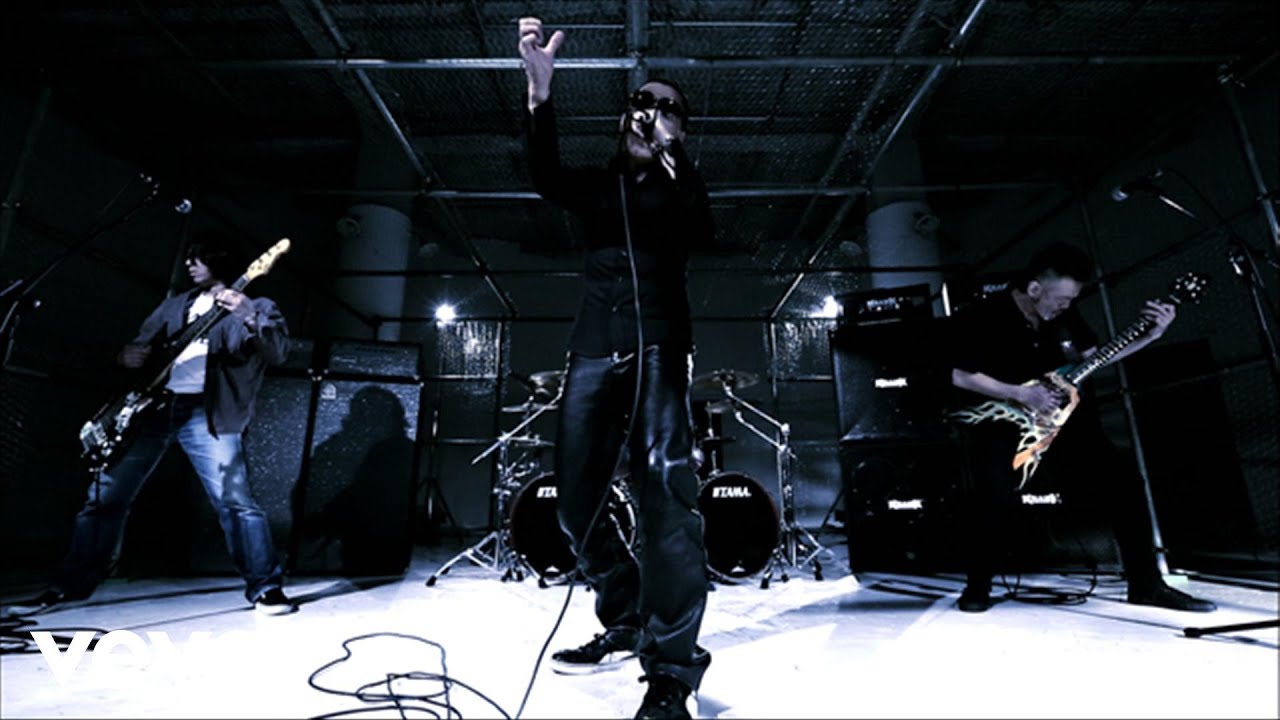
The implications for hardcore and metal specifically are enormous. Think about what the standard kit-on-demand model actually changes. A teenager in Osaka doesn’t need to find a drummer who owns gear. A drummer in Sapporo doesn’t need to beg parents for a practice pad and hope. You book a room. Drums are there. You start.
Metabolism, Not Just Access
The foreign press tends to frame Japan’s heavy music productivity as a cultural quirk — the diligence thing, the rehearsal ethic, the way bands here practice with a seriousness that can look almost athletic. That’s not wrong, but it’s incomplete. Infrastructure enables ethic. You can’t rehearse obsessively if you have nowhere to rehearse.
What the rental studio ecosystem actually created is something closer to a metabolic condition for the scene. Bands form faster because the startup cost is low. They rehearse more frequently because the marginal cost of each session is manageable. They iterate — tighten arrangements, try tunings, burn through bad ideas — at a pace that scenes dependent on privately owned rehearsal spaces simply cannot match. And when a band breaks up, which bands do, the individual members scatter back into the same cheap room network and form new things immediately. The turnover is high. The learning curve is steep and short.
This partly explains something that confuses a lot of foreign listeners the first time they dig into Japanese metal and hardcore: the sheer quantity of serious, fully-formed-sounding acts coming out of cities that don’t have especially large populations. You’d expect that from Tokyo. You don’t necessarily expect it from, say, a mid-sized regional city. But if the infrastructure is there, the output follows.
There’s also a social function that’s easy to miss. The studios are genuinely public in a way that house rehearsal spaces aren’t. You book adjacent rooms with strangers. You hear what the band next door is doing through thin walls. Scene cross-contamination — a crust punk picking up a death metal run by accident, a prog kid overhearing a grindcore band — happens physically, spatially, without anyone planning it. That kind of lateral transmission doesn’t show up in any oral history of any band, but it shapes the sound of a city over decades.
What This Costs, and What It Doesn’t
Honest caveat: the model has pressure on it. Urban rent in major Japanese cities has climbed, and some of the smaller independent studios have thinned out or consolidated. The economics that made the system work so elegantly are not guaranteed to hold. There’s a generational conversation happening in the scene about this — not in public, mostly in the van and the vending machine corridor outside the booth.
What has already happened, though, can’t be undone. Decades of low-barrier access to drums in dense urban space produced a body of musicians, a learned culture of frequent rehearsal, and a scene infrastructure — bookers, small live houses, zine networks — that grew up assuming bands would be plentiful and practiced. That assumption shaped everything downstream.
The room was cheap. Bring your sticks. That’s all it took.