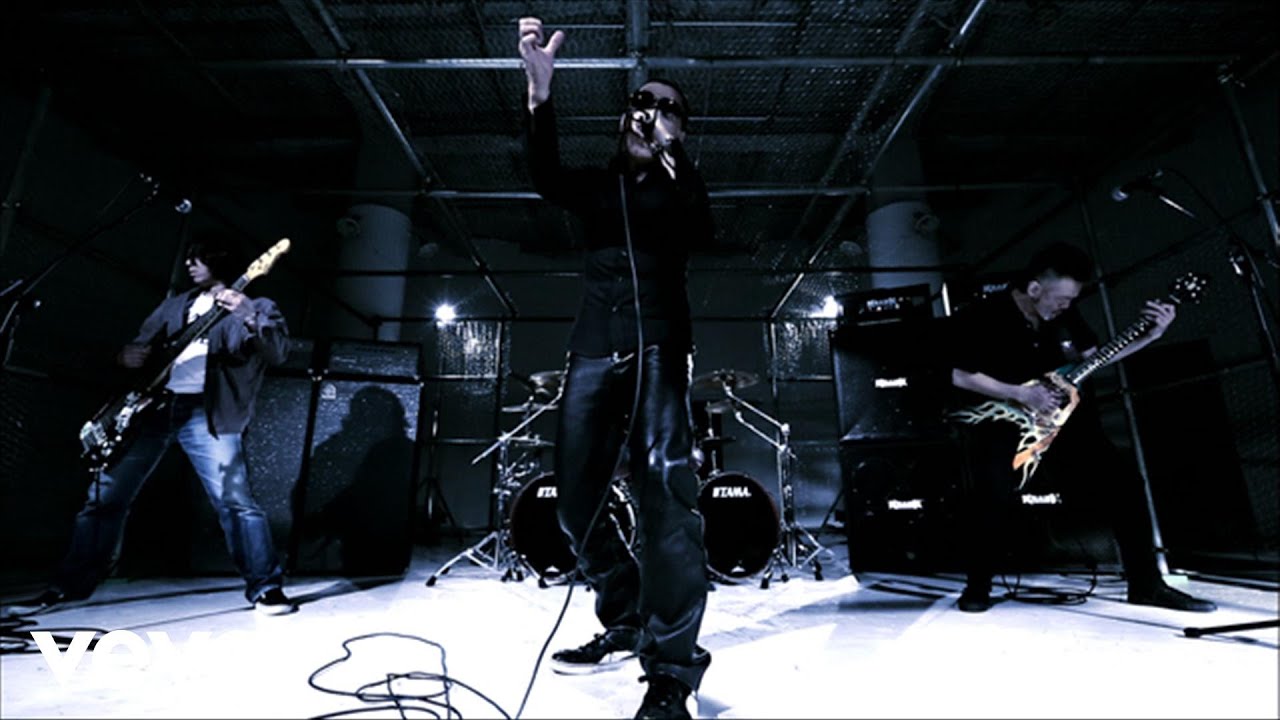

There’s a room in almost every Japanese high school and university that a foreign metal fan would recognize instantly. Fluorescent light. A carpet that smells like twenty years of teenagers. A 4x12 cabinet that nobody remembers buying, covered in stickers from bands that broke up before the current members were born. That room is the single most important piece of infrastructure in Japanese heavy music, and hardly anybody outside the country talks about it.
The 軽音楽部 — keiongaku-bu, light music club — exists at a scale that has no clean equivalent in the US or Europe. School clubs in Japan aren’t hobby groups you drop into. They’re structured, timetabled, supervised, run by students with a formal hierarchy, and they come with a room, gear, a budget, and a calendar. At university level it gets more specialised: the hard rock circle, the metal kenkyūkai, the copy-band society that exists purely to do one artist’s repertoire every autumn. Somebody who picks up a guitar at fifteen can spend seven years inside institutions that give them free rehearsal space and a guaranteed audience twice a year.
That’s not a scene. That’s a training system. And it explains a lot about why Japanese players are so consistently, almost unfairly, tight.
What the club actually produces
Here’s the thing though. The club system is optimised to produce players, not bands.
Look at how the unit works. The organising principle isn’t the band, it’s the cohort and the event — the school festival, the year-end live, the inter-university event. Lineups get assembled per occasion, often around a copy set, because a copy set is teachable. A first-year can be handed a chart and a deadline. Original material can’t be taught the same way, and it can’t be handed down to next year’s intake, which is what the club actually needs to survive as an institution.
So the senpai-kōhai chain transmits an enormous amount: technique, gear knowledge, stage discipline, how to load in, how to talk to a venue, which shop to take a broken pedal to. What it doesn’t transmit is the thing a band needs most, which is a reason to keep existing after the calendar runs out.
Where it leaks
The leak has a date on it, and everybody in Japan knows it. It’s spring of the fourth year.
Actually, it’s earlier. Job hunting eats the third year of university, and rehearsal attendance collapses months before graduation — plenty of these bands die without a final show, just a group chat that goes quiet. Then the real inversion hits. As a student you have time and no money. Employed, you have money and no time, and the money doesn’t help, because the bottleneck was never cash.
Live house economics make this worse in a specific way. The ticket quota system rewards people who can reliably move thirty tickets to their immediate social circle, and a student club is precisely that machine — classmates, other circles, the school festival crowd. Graduate and that crowd disperses across the country. Add corporate transfers and the fact that the bass player is now in Nagoya, and the unit isn’t defeated by a lack of passion. It’s defeated by logistics.
The ones who get through, in my experience, are almost never the club’s star players. They’re the ones who ran a second band outside the club while they were in it — gigging at real venues, writing original material, building an audience that had nothing to do with their student ID. They used the club as a gear locker and a practice room. They built the actual thing somewhere else.
And plenty of the pipeline’s output never appears onstage at all. The PA engineer at your favourite small venue, the person running the merch table, the guy who books the Sunday matinee — a lot of them came out of exactly these rooms, kept the fluency, and moved sideways into the parts of the scene that don’t require you to be twenty-two with free evenings.
Which is why that battered cabinet matters more than it looks. Somewhere in Japan tonight, a first-year is being shown how to mic it up by a third-year who has already stopped answering emails from the band.