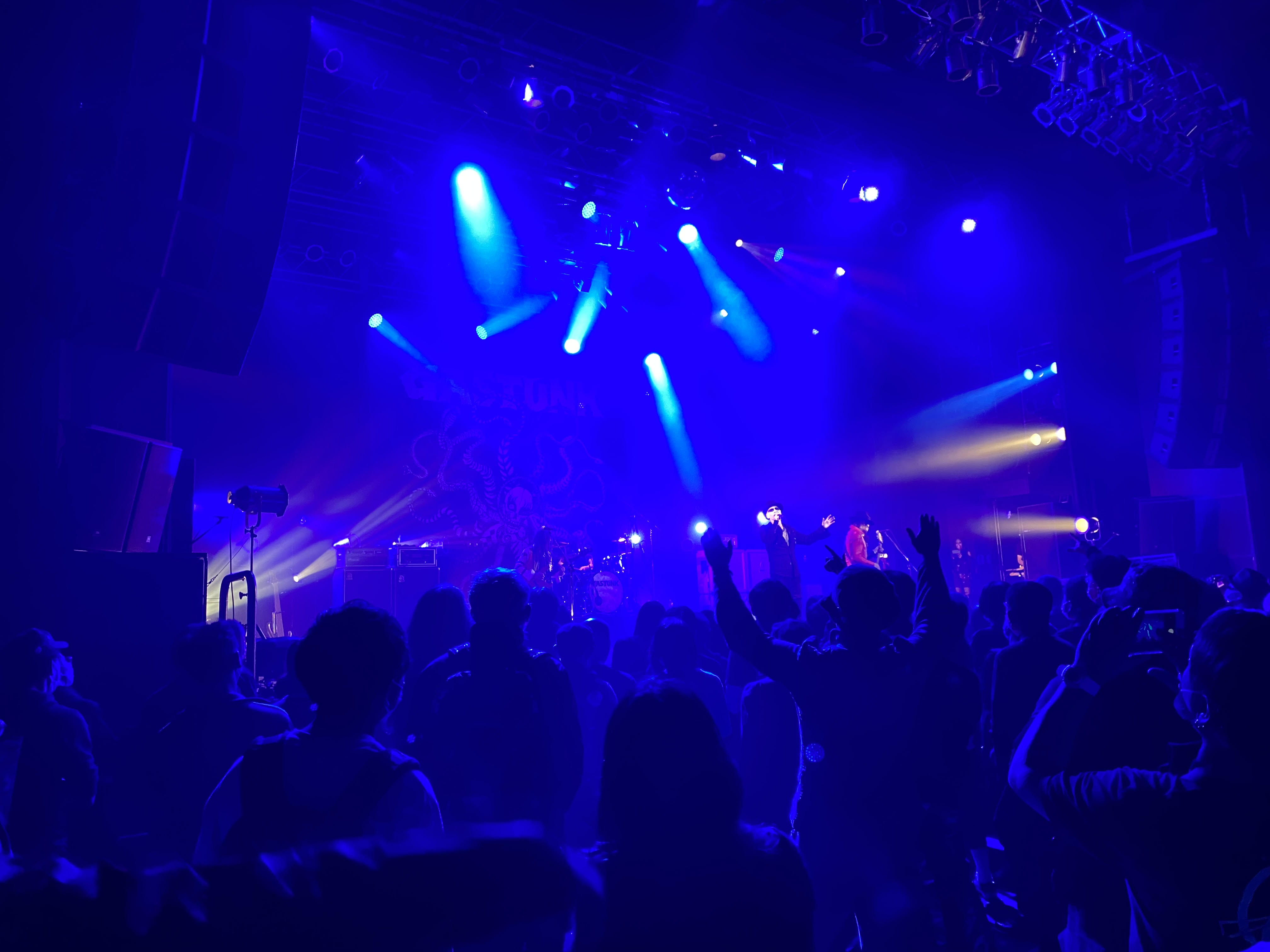
The Room That Actually Fits Metal
I’ve been going to shows in Tokyo for thirty years, and Dogenzaka still hits different every time I climb that hill. One thing that never stops being distinctly Japanese about the whole experience: right around here, you’re walking through what’s long been known as a love-hotel district — the kind of place where couples rent a room by the hour, because apartments in this city are small and privacy is a genuine luxury. It’s one of those things foreign visitors do a double-take at, half bemused, half charmed. Honestly, fair enough. Anyway. You come up that hill past all of that, and then you walk into a metal show. Tokyo contains multitudes.
There’s a specific kind of energy you get at a show where the room is just big enough to feel like a real event but small enough that you’re still inside the sound, not watching it from a distance. Shibuya O-East, sitting at roughly 1,300 capacity, lands right in that zone. I’ve stood in the back third of that floor and still felt the kick drum in my chest. That’s the whole deal.
O-East and its smaller sibling O-West occupy the same building on Shibuya’s Dogenzaka hill, the strip that climbs away from the scramble crossing toward the old love-hotel district. They’re technically separate venues sharing an entrance complex, which means on big nights you’ll walk past a completely different crowd queuing for O-West while you’re waiting for doors on your side. The buildings aren’t glamorous. Concrete, functional, slightly worn — honestly, that’s exactly how a metal venue should look.
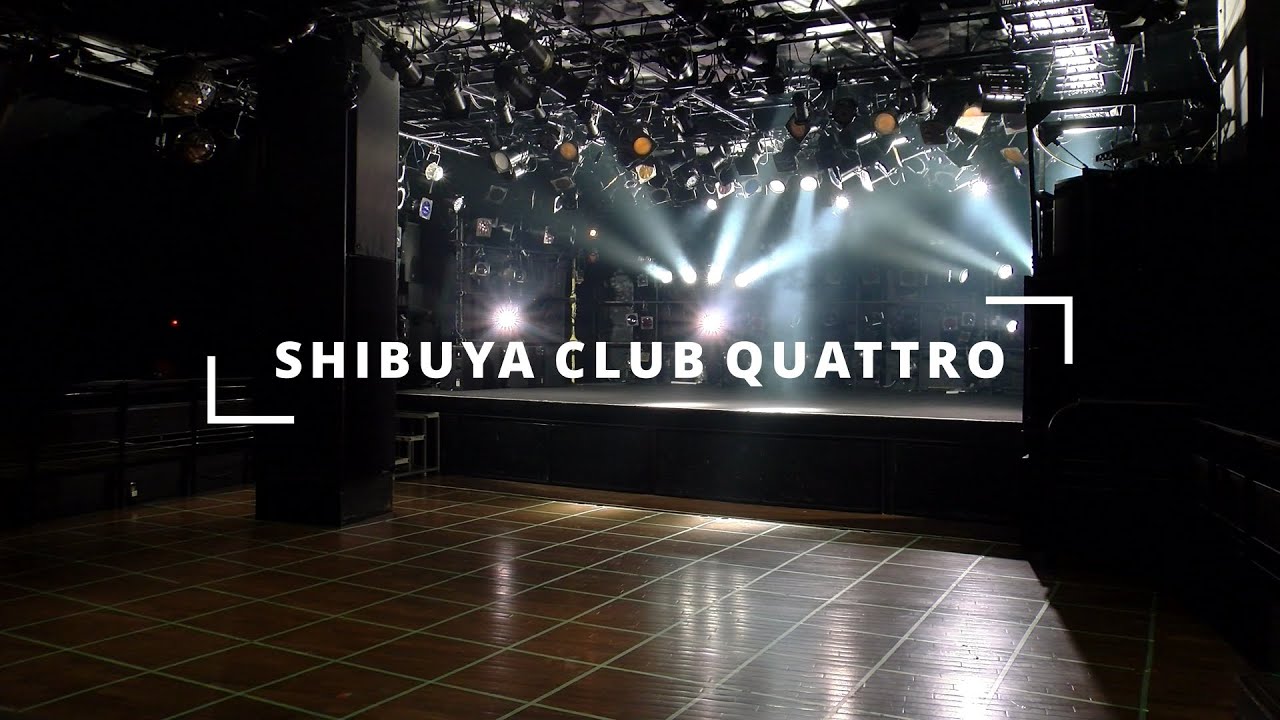
O-East is the one that matters most for mid-tier touring metal, both domestic and international. The stage has real headroom, a proper PA setup that handles low-end without turning everything into mud, and a floor layout that rewards getting there early enough to plant yourself somewhere sensible. The raised back section is genuinely useful if you want sightlines without elbows in your ribs.
Getting In, Getting a Drink, Not Getting Turned Away
The nearest station is Shibuya, which is served by basically every train line in Tokyo. From the scramble crossing it’s a ten-to-fifteen minute walk up Dogenzaka — steep enough that you’ll feel it, easy enough that it won’t ruin your night. If you’re coming from Hachiko exit, just head uphill and trust your maps app; the signage on the building itself is clear once you’re close.
Ticketing works the Japanese way, which means e-plus and Lawson Ticket are your main entry points for advance purchases. Lawson terminal tickets — the ones you reserve online and print at a convenience store kiosk — are absolutely the path of least resistance for foreign visitors without a domestic payment setup. Bring the confirmation number, find a Lawson, and you’re done. Door tickets exist but stock is genuinely limited for anything with traction, so don’t gamble on it.
You will pay a drink charge at the door — typically five or six hundred yen on top of your ticket price. You get a token or a wristband, redeem it at the bar for a beer, soft drink, or a glass of something forgettable. It’s not optional. It’s not a big deal either; just have the cash ready because card-only hands slow the queue down for everyone.
ID checks happen. Bring your passport. A driving licence from your home country is theoretically acceptable but I’ve seen it cause friction. Passport is the cleanest answer.
After the Show
Dogenzaka and the surrounding Shibuya backstreets are full of ramen spots, izakayas, and a few reliable standing-bar options that stay open well past midnight. The area doesn’t sleep quickly. If you want to debrief properly after a long set, walk back toward the station and take a left rather than heading straight for the scramble — there are narrower streets there with less tourist-track pricing and better food. Shibuya is not the most charming post-show neighbourhood in Tokyo, but it is convenient, and sometimes that’s exactly what you need at midnight with ringing ears.