
Not Your Average Sweat Box
Every time I walk past this place, I’m struck by who’s coming through the doors. One night it’s anime otaku. Next time, idol fans going absolutely feral. Then you turn up on another occasion and it’s these intimidating, scary-looking guys — and then the time after that, it’s beautiful girls. That’s the range we’re talking about. That breadth is what EX Theater actually is, before you even step inside.
Most of Tokyo’s metal venues have a certain… texture to them. Low ceilings, sticky floors, that specific smell. Roppongi EX Theater is a different animal. Tucked into one of Tokyo’s flashiest neighborhoods, it carries an air of polish that you don’t usually associate with a night of heavy riffs — and honestly, that crowd-to-crowd whiplash is a big part of why the place sticks with you. It’s not a metal venue. It’s not an idol venue. It’s a room that simply doesn’t care what your thing is, as long as your thing is big enough to fill it.
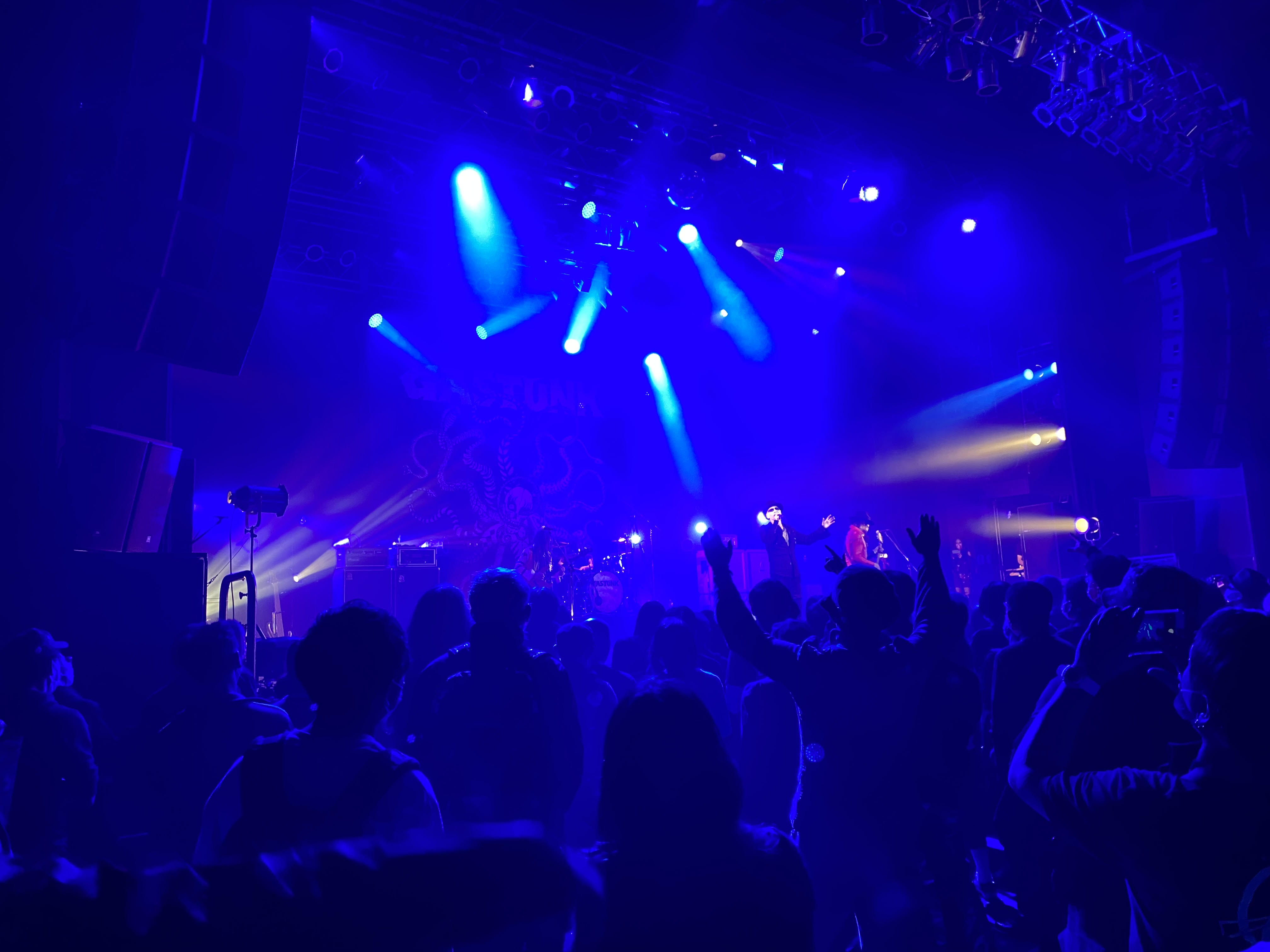
This is a mid-sized room, which in Tokyo terms means it sits comfortably between the cramped intimacy of a basement live house and the impersonal scale of an arena. You’re not pressed against a stranger’s back the whole set, but you’re also not squinting at the stage from the upper deck of some cavernous hall. Sight lines are solid. The production — lighting, sound — tends to run cleaner here than at grittier spots around the city. When a band wants to look good, they book EX Theater.
The bookings lean toward acts with a bit of production ambition behind them. This isn’t really the room for a chaotic three-band local showcase on a Tuesday. It pulls in touring acts, bigger domestic names, and the kind of event that comes with proper ticketing infrastructure and an actual support crew on stage.
Practical Notes for the Foreign Reader
Getting there is straightforward. Roppongi Station serves both the Tokyo Metro Hibiya Line and the Toei Oedo Line, and the walk from either exit to the venue is short enough that you won’t need to pull up a map more than once. That said, Roppongi itself is dense — give yourself a few minutes to orient.
Tickets in Japan almost always go through one of two major platforms: e-plus or Lawson Ticket (accessed through Loppi terminals inside any Lawson convenience store). Both systems can be navigated in English with some patience, and buying at a Lawson terminal the week of the show is a perfectly normal thing to do. Some events also sell through the venue’s own site — worth checking directly.
Once you’re inside, expect a drink charge. This is standard across Tokyo live houses regardless of size or price point — you’ll typically pay a few hundred yen at the bar when you enter and get a token or a ticket in return. It’s not optional, but it’s not a big deal either. Just factor it into your budget alongside the door price. ID checks for alcohol are theoretically on the table; having your passport or residence card on you is always the right call.
One more thing: Japanese shows tend to start on time. Doors and set times printed on the ticket are real. If it says 18:30 open / 19:00 start, the first act will be playing at 19:00. Don’t be the person who wanders in at 19:20 expecting a warm-up set.
After the Show
Roppongi does not lack for options after midnight. The neighborhood is, to put it gently, built for people who want to keep going. There’s no shortage of izakayas, ramen counters, and bars within comfortable walking distance of the venue — ranging from cheap-and-cheerful to the kind of place where the cocktails have names you won’t recognize. If you want quieter, you can hop back on the Metro and be in Shibuya or Shinjuku in minutes. Either way, you won’t end the night hungry.
EX Theater might not feel like an underground metal den, and that’s fine. The crowd outside tells you everything you need to know — this is a room that takes whatever it’s hosting seriously, and sometimes that’s exactly what the scene deserves.