The Magazine Rack That Disappeared
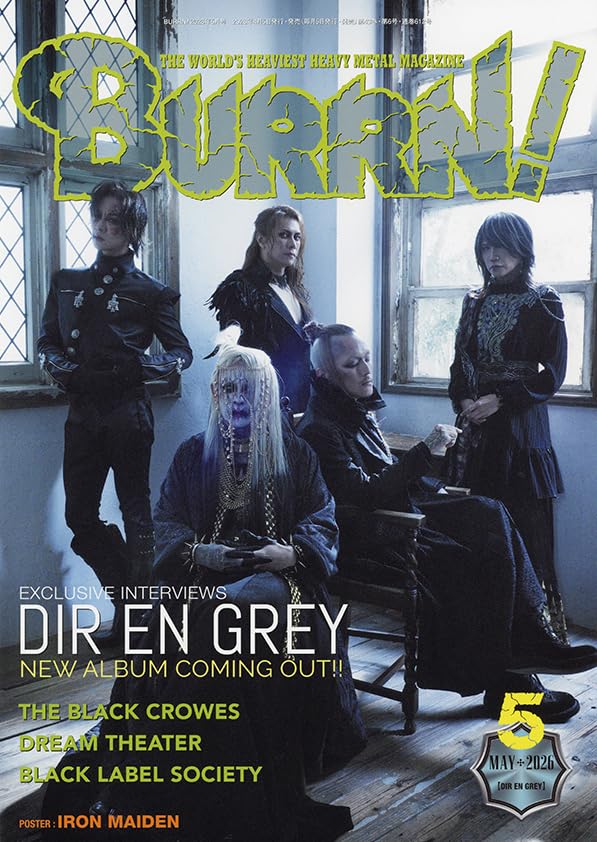
Walk into a Tower Records in Shibuya today and the music press section looks like a crime scene. Gaps where titles used to be. A slow bleed that took years to become obvious. Japan once had a legitimate cluster of heavy metal magazines competing for the same readers, and most of them are gone. BURRN!, somehow, is not. If you’ve wondered why, the answer is less about editorial quality than it is about three ugly structural facts: who was buying the advertising, who was actually reading, and who controlled the trucks.
Start with advertising. Metal magazines everywhere depend on record labels more than newsstand sales, and Japan is no exception. The key difference is that the Japanese market has long been dominated by major-label domestic subsidiaries — Sony, Warner, Universal — who treat print advertising as a cost of doing business with media gatekeepers. BURRN!, by establishing itself early as the prestige address for Western metal in Japan, locked in a relationship with those subsidiaries that smaller rivals could never quite replicate. A label promoting a foreign artist in Japan wants their ad in the one title that matters to the import-buying demographic. That’s a self-reinforcing loop. The moment BURRN! became synonymous with serious metal coverage, its advertising position hardened into something close to a monopoly on the category.
Rival titles could undercut on ad rates. Many tried. But rate cards only matter when the buyer believes the audience is equivalent, and by the mid-to-late print era, advertisers had concluded it wasn’t. The other books were covering adjacent ground — harder rock, visual kei crossover, domestic acts — which diluted the signal. BURRN! stayed narrow. Fanatically narrow. That narrowness, which critics sometimes read as conservatism, was structurally protective.
Who Was Actually Paying
Then there’s the reader base. Japan’s metal fanbase skews older than the rest of the music press market, and that matters enormously for print survival. Older readers cancel subscriptions less often. They are less likely to have migrated entirely to streaming and YouTube for discovery. They still buy CDs, which means they still inhabit the physical retail ecosystem that print media depends on — the kind of person who picks up a magazine next to the import bin. BURRN! didn’t manufacture this demographic; it accumulated it over decades and then benefited passively as the median age of the print-reading audience rose while younger readers left the medium entirely. A magazine built for teenagers in 1982 would be struggling by 2005. A magazine built for serious adult enthusiasts in 1982 had, perversely, grown into exactly the reader profile that sustains print longest.
The distribution angle is less glamorous but maybe the most decisive. In Japan, magazine distribution runs through a tight network of wholesalers — the toiya system — and shelf space in convenience stores and bookshops is allocated partly on the basis of return rates and partly on long-standing commercial relationships. BURRN!, published by Shinko Music (later absorbed into larger corporate structures), had those relationships baked in from an early period. Smaller specialty titles faced a brutal equation: without guaranteed shelf placement in the national convenience store chains, you are invisible to the casual reader; without casual reader sales, your print run is too small to justify the shelf space. A catch-22 that strangled competitors who might have found an audience if they’d ever gotten in front of one.
What killed the other titles, then, wasn’t that readers stopped loving metal. It’s that the structural supports — ad revenue locked to one title, an aging-but-loyal reader base concentrated on one brand, distribution relationships built over decades — all funneled toward a single survivor. The Japanese magazine industry does this across categories. One title per niche tends to win decisively and then hold. BURRN! was already that title by the time the contraction started.
Pick up a copy next time you’re near a Kinokuniya. The paper feels almost anachronistic. That’s kind of the point.