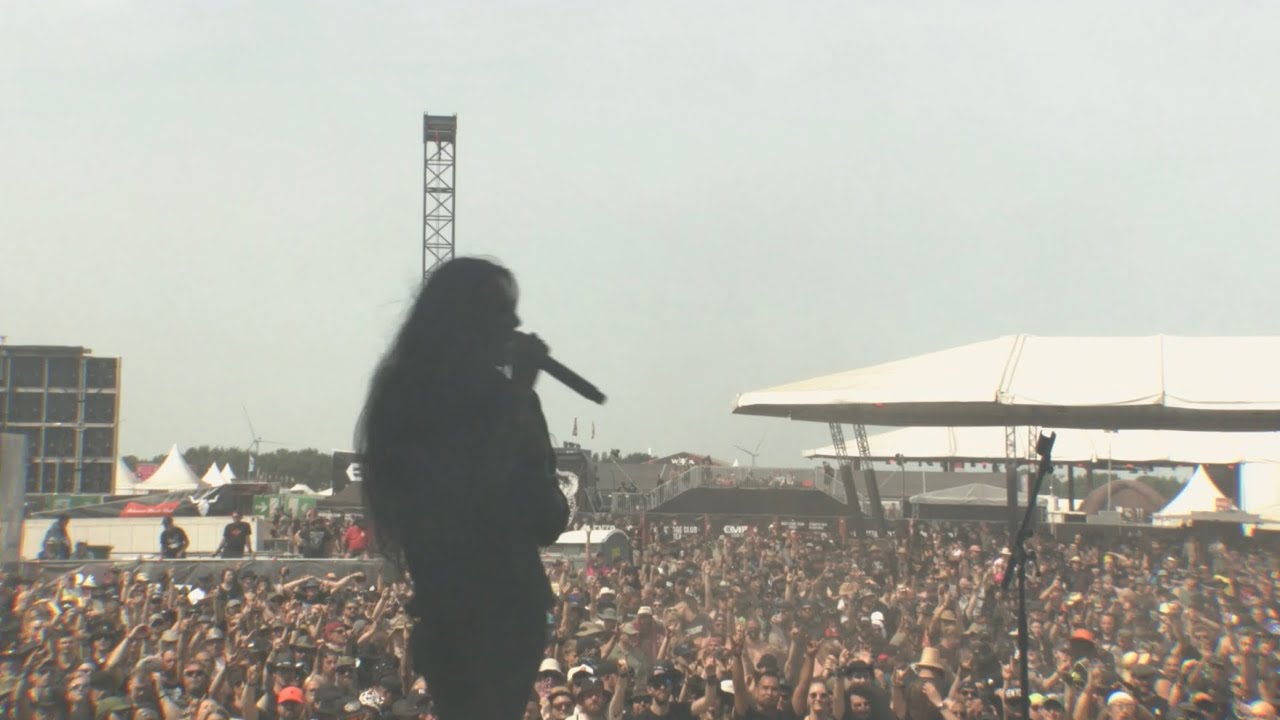
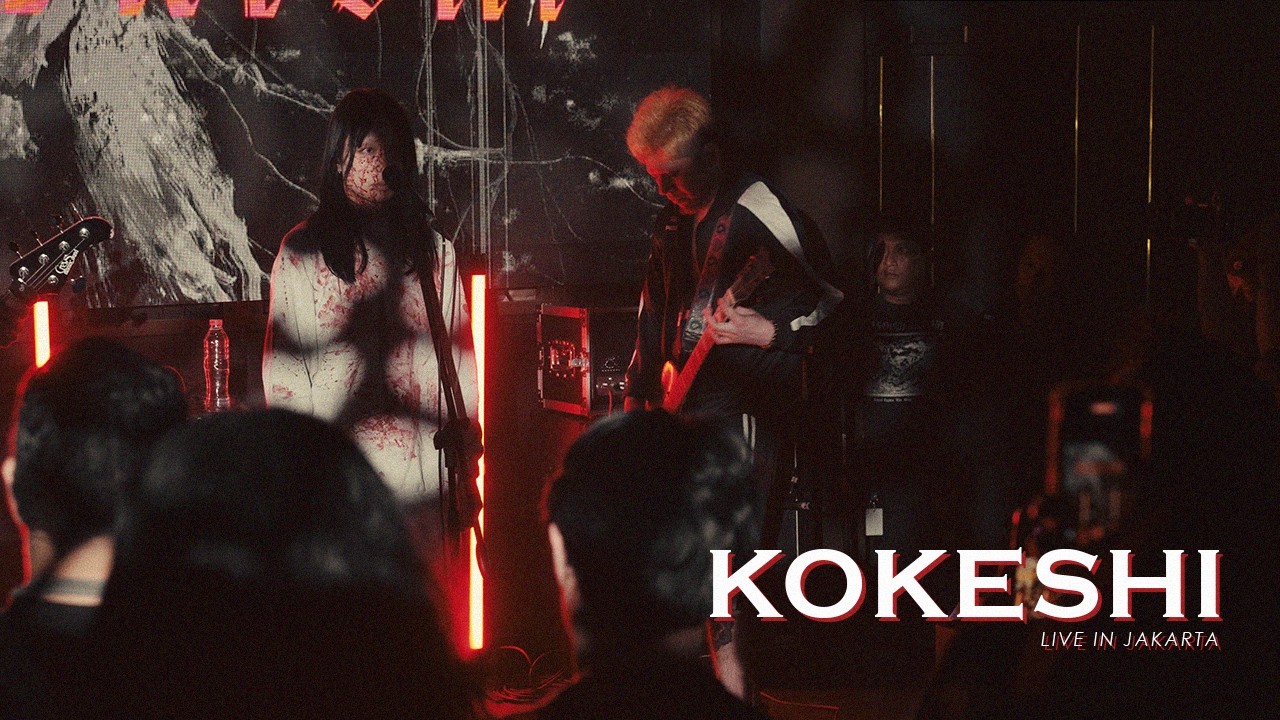
Start with the name. A kokeshi is a traditional Japanese wooden doll — limbless, featureless but for a painted face, the kind of object every Japanese household has seen on a shelf and no Japanese child has ever found entirely comfortable. Choosing it as a band name is the whole aesthetic in one word: something domestic and familiar, tilted a few degrees into wrongness.
That’s what separates kokeshi from the international blackened-hardcore field they’d otherwise sit beside. The band’s own framing is horror and blackened metal intertwined, and the horror half is specifically, untranslatably Japanese.
Why J-Horror Sounds Different
Western horror escalates. It builds toward the reveal — the monster, the chase, the scream — and the payoff is adrenaline. Japanese horror at its best does something colder: it establishes that something is already wrong, has been wrong for a long time, and that nothing you do will address it. The dread is ambient, domestic, patient. Long hair, a wet floor, a sound from a room you’ve already checked.
Now consider what that means musically. The Western instinct — the metal instinct — is escalation: build the tension, deliver the breakdown. kokeshi instead let dread sit. Passages stretch past comfort. Beauty arrives in the wrong place and refuses to resolve. The violence, when it comes, doesn’t feel like release; it feels like confirmation.
The Vocabulary in the Track Titles
Look at what the band reaches for on 冷刻: わらべうた — a children’s nursery rhyme. 涅槃欠損少女読経 — a sutra chanted by a girl who fell short of nirvana. 報いの祈り — a prayer for retribution.
Nursery rhymes and Buddhist chant are the two deepest wells in the Japanese horror tradition, precisely because both are supposed to be comforting. A warabe-uta is the sound of childhood safety; a sutra is the sound of the dead being cared for. Put either in the wrong context — sung too slowly, by the wrong voice, in the wrong room — and the comfort inverts completely. Japanese horror cinema has known this for decades. kokeshi brought it into extreme metal.
The vocal performance is where it lands: 亡無 moves between a death-metal register, a whistled tone, clean singing and outright recitation, which means the band can deploy chant and lullaby as actual chant and lullaby rather than as a metal approximation of them.
Why It Travels
Here’s the paradox this site keeps running into: the more specifically Japanese a band’s frame is, the better it tends to travel. A listener in Manchester who has never heard a warabe-uta still registers that something in the melody belongs to a childhood that isn’t theirs, and that estrangement is exactly the effect. Blackgaze is a global language now. kokeshi speak it with an accent nobody else has.
Start with the albums, preferably after dark, preferably alone. That’s not a marketing line — the records genuinely work better that way.