
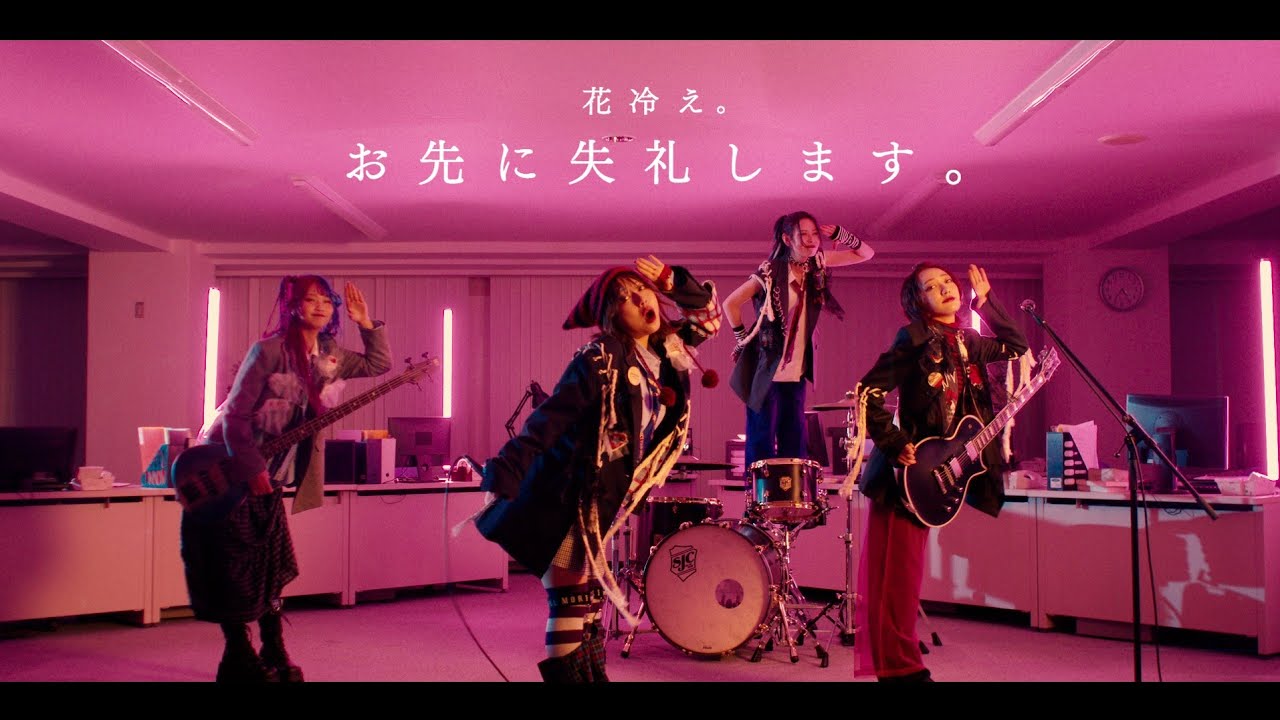
Hanabie.: Metal Is a State of Mind
I’ll never forget the first time I saw them. It was a summer outdoor festival — the kind of day where the heat comes off the asphalt in waves and standing still feels like a punishment. The temperature was genuinely brutal, the kind that warps instrument tuning and turns pedal boards into liabilities. And the band was feeling every bit of it — you could see it. But the vocalist didn’t flinch. She dragged the crowd into her orbit through pure force of will, sweat and blistering conditions and all, and something clicked for me in that moment. This is what metal actually is. Not a genre tag or a visual signifier, but a refusal — a fundamental act of defiance against whatever circumstances you’ve been handed. And watching a young Japanese woman own that stage under an unforgiving sun, I thought: a new metal star has arrived. The real kind.
That band was Hanabie.
The First Time You Hear Them
If you come to the records before you’ve seen them live, there’s still this split-second of confusion the first time they hit you. The melodies are bright, almost sugary — and then the guitars drop and everything goes sideways in the best possible way. That contrast is the whole point. It’s not a gimmick, and anyone who dismisses it as one hasn’t actually listened close enough.
Hanabie. play metalcore. Proper metalcore — chugging breakdowns, screamed vocals that have real bite, riffs that don’t let up. But layered on top of all that aggression is a melodic sensibility that owes something to Japanese pop music, and the combination lands harder than either element would on its own. It’s one of the more exciting sounds sitting in Japan’s underground right now, and it feels genuinely homegrown rather than borrowed from a Western template.
The band is all-female, which in the context of Japanese heavy music still gets flagged as a novelty by lazy critics. Don’t fall for it. What Hanabie. do in terms of pure songwriting and live intensity would stand on its own regardless of who’s playing. The gender conversation is worth having — representation in this scene matters — but it shouldn’t be the first or only thing people lead with. These songs earn the attention. And having stood in that festival crowd watching their vocalist refuse to let the heat win, I can tell you: the conversation about who they are is the least interesting thing about them.
What the Music Actually Does
There’s a structural intelligence to how Hanabie. build their tracks. You get the sense that every passage is placed deliberately — the clean melodic hooks aren’t breathers, they’re loaded. When the heaviness crashes back in, the contrast has been set up to hit harder. It’s the kind of construction that rewards repeat listening, where you catch something new in the arrangement every time through.
The vocal interplay is a big part of why it works. Shifting between clean delivery and visceral screaming inside a single song is a technique that can feel mechanical if the transitions aren’t handled carefully. Hanabie. handle them carefully. There’s emotion moving through both registers, not just a toggle between soft and loud.
Production-wise, the recordings carry enough modern punch without sanding off the edges that make heavy music feel alive. That balance is harder to get right than it sounds, and a lot of bands on both sides of it — either too sterile or too raw — lose listeners somewhere in the middle.
Live, from everything I’ve seen and heard from people who’ve caught their shows across Japan, the energy translates completely. Some bands are strictly a studio thing. Hanabie. are not that band. Trust me on that one.
Why Foreign Fans Should Pay Attention
Japan’s metal scene runs deep, and a lot of it never makes it out past the country’s own network of venues and message boards. Hanabie. feel like one of those acts that could genuinely cross over — not because they’ve softened anything, but because the songwriting is strong enough to work on a broader audience without needing translation or context.
If you’re a metalcore fan who thinks they’ve heard every variation on the genre, this is a case where I’d push back on that. The specifically Japanese melodic sensibility that Hanabie. bring to the structure isn’t something you’re getting from bands operating in any other scene. It’s a real distinguishing factor. And it connects back to what I saw at that festival — that spirit of defiance, that refusal to be diminished by circumstance, which is as old as metal itself and which Hanabie. carry like they were born to it.
To be real, it’s the kind of thing that makes you remember why you started digging into regional scenes in the first place — that feeling of finding something that could only have come from exactly where it came from.
Keep this name close.