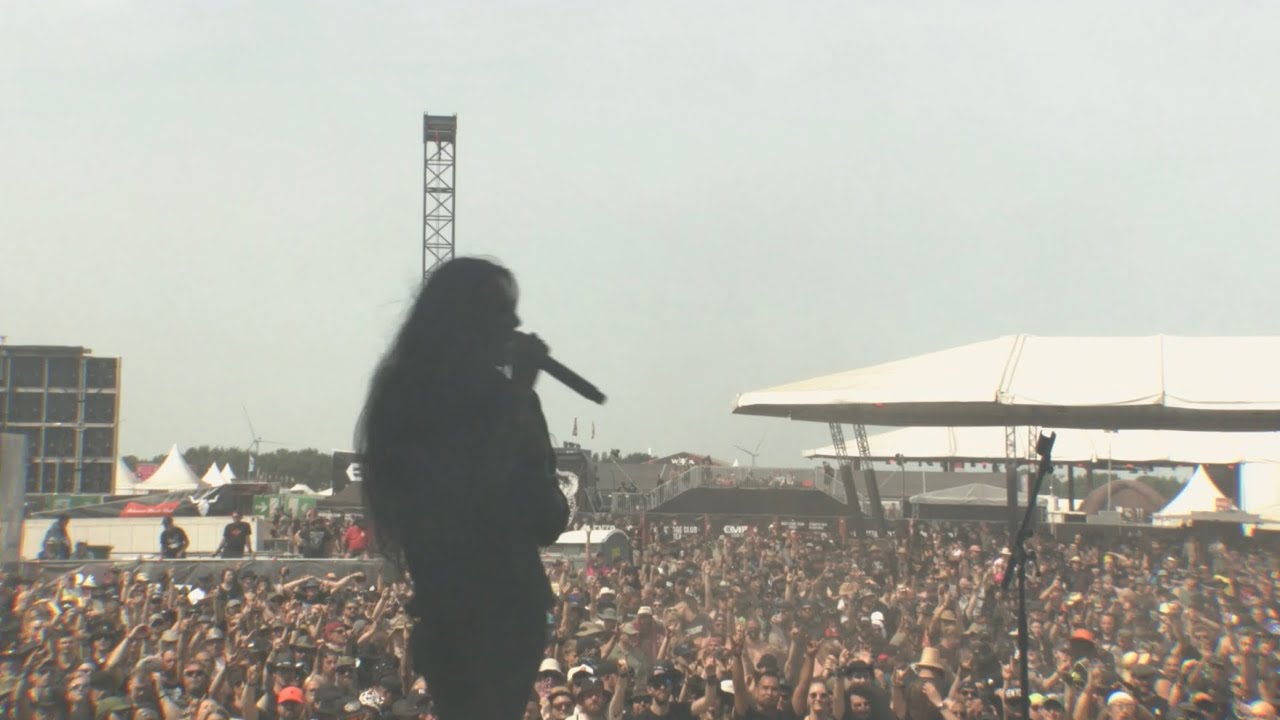

The name looks like a typo. GRAVAVGRAV — a word folded over on itself, the kind of thing you assume got mangled somewhere between a distro spreadsheet and a flyer. It isn’t mangled. That’s the band. And honestly, once you’ve heard a few minutes of what they do, the ugly symmetry of it starts to make a grim kind of sense.
This is death metal of the unfashionable sort. No orchestral intro, no cinematic mid-section where the clean guitars come in and everybody looks at the floor meaningfully. Just riffs stacked like cinderblocks and a vocal that sounds like it’s being forced out through a collapsed lung. If you came up on Incantation’s murk or the low-slung Finnish stuff, you’ll find the vocabulary familiar. What GRAVAVGRAV do with it is the interesting part.
Weight over speed
Plenty of Japanese death metal bands go for velocity. It’s a national strength, frankly — the precision-obsessed, hyper-drilled side of the underground here produces some of the tightest blasting on earth. GRAVAVGRAV mostly aren’t chasing that. They’re chasing weight.
Tempos sit in that awful middle zone where a riff has enough room to actually land on you. The guitars are tuned down into a place where individual notes stop being notes and start being events. When the band does open up into a faster part, it’s not a showpiece — it feels more like something has slipped and the whole structure is sliding downhill for a few bars before it catches again. That control is the thing. Anybody can be slow. Being slow without being boring takes taste.
The production on their material follows suit. Nothing sounds sterilized. Guitars have that fibrous, slightly matted quality where you can hear the amp working, drums sit in the room instead of floating above it, and the bass is genuinely audible, which in this style is closer to a statement of intent than a mixing choice. It’s the kind of sound that rewards headphones at a volume your neighbours will hate.
Why it lands in Japan
There’s a thread in the Japanese underground that has always valued endurance over flash. You see it in the noise scene, you see it in the doom bands who’ll take twenty minutes to arrive at a chorus, and you see it here. Death metal in Japan has never really needed to be commercial, which means the bands that stick around do it because the music is the point. Small rooms. Handmade merch. Splits with bands from three prefectures over. Word of mouth doing the work that marketing budgets do elsewhere.
GRAVAVGRAV sit comfortably in that lineage. There’s no visual gimmick to sell, no narrative hook that makes for an easy press paragraph. The records are the argument. I’d point a newcomer at their heaviest, most mid-paced material first — not the fastest track, whichever that turns out to be for you, but the one where the main riff repeats until it stops feeling like a riff and starts feeling like weather.
That’s the test with bands like this. Does the repetition become hypnotic or does it become tedious? With a lot of imitators it’s tedious. Here it tips over into something almost ritual, helped by the fact that the band seem allergic to overstaying. Songs end. They don’t dissolve into a five-minute ambient outro because someone read that atmosphere is important.
For foreign listeners, the barrier isn’t language — you’re not going to understand the lyrics either way, and death metal has never cared much about that. The barrier is just finding the stuff. Japanese underground releases can be maddening to track down from overseas, and GRAVAVGRAV are not a band with a slick global rollout behind them.
Which is part of the appeal, I think. Dig for it. Put it on loud. Let the ceiling come down.