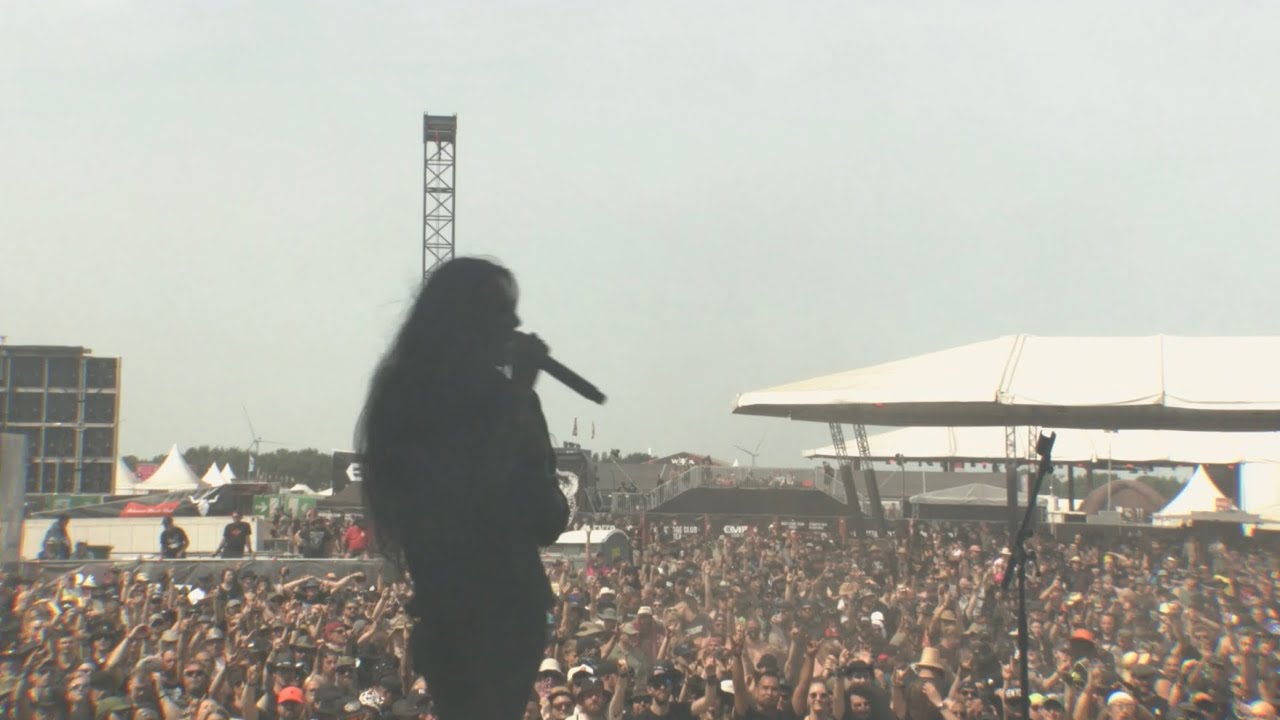

First, the name. It is written ヱヰ十, using two characters that dropped out of everyday Japanese long ago, and it is read Eito. That sounds the same as the English word eight.
The Chuo Line
Eito calls its music JR CHUO LINE HARD CORE. The Chuo Line is the orange commuter railway that runs west out of central Tokyo, through Nakano, Koenji and Kichijoji. Those neighbourhoods are known for their small venues and record shops. Naming your style after a train line is a way of saying exactly which part of Tokyo you belong to.
The Band
It is a six-piece with two vocalists. MARU and Kimihiro share the microphone. Nishi and Yoshifumi play guitar, Hamataro plays bass and YYU-KING plays drums.
The band started in a high-school light music club, the after-school band clubs that Japanese schools run. A good number of Japanese heavy bands began the same way. Hanabie. is another.
Breaking the Wall
The band’s stated aim is to keep a heavy hardcore sound running underneath while knocking down the walls between genres. The clearest example came on 26 March 2025.
That day Eito released “饗宴,” a single made with Rappagariya. For anyone who follows Japanese hip-hop, that is a serious name. Rappagariya formed in 1993, and its second album, in 2000, sold around 110,000 copies and helped bring the hardcore style of Japanese rap to a wide audience.
The title means “feast.” It was Eito’s first new release in about a year, and it was promoted as a true crossover of hardcore and hip-hop.
A second collaboration followed on 19 November 2025: “遊益,” made with the artist J-REXXX.
Eito Day
Every year on 8 August, the eighth day of the eighth month, the band puts on its own show. It calls the date Eito Day.
Why It Matters
Hardcore and hip-hop have been neighbours in Tokyo for decades. Eito treats the border as open, and has had one of Japanese rap’s veteran groups walk across it.
Start with “饗宴.”