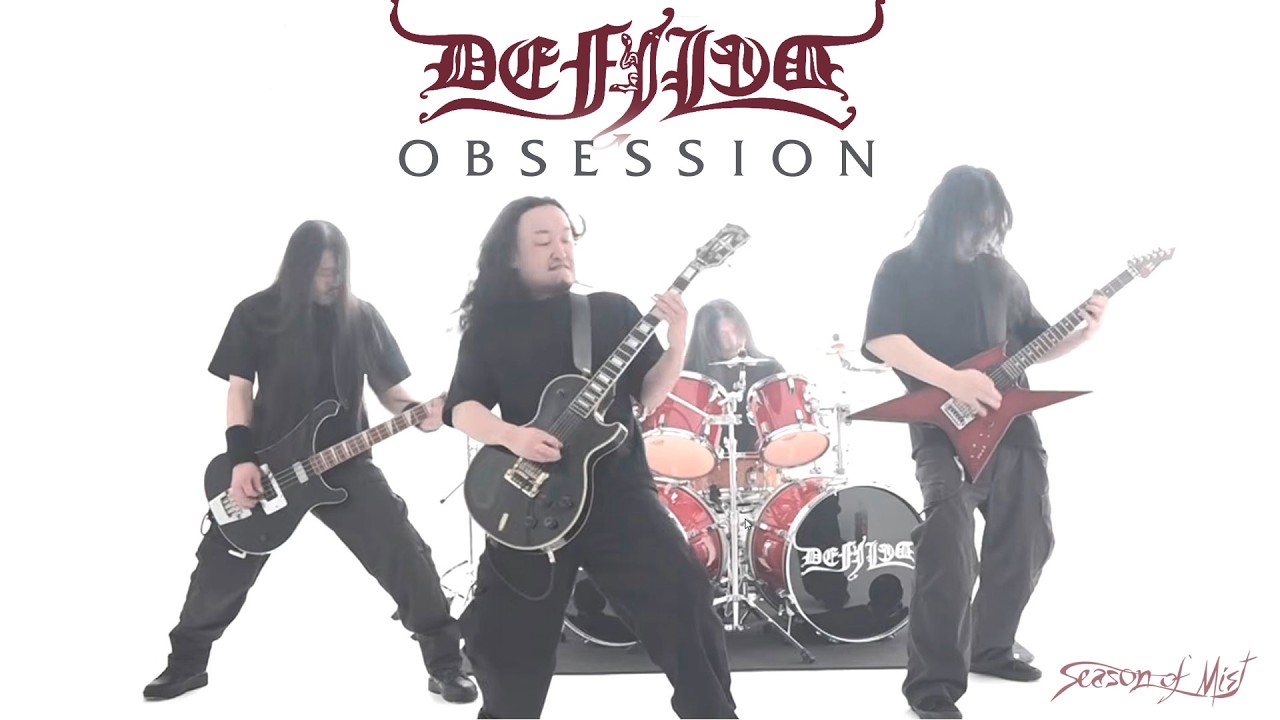
Why Defiled Hit Different
I was in high school when this band played a university culture festival — a gakuensai — and I’m still not entirely sure I’ve recovered. One minute I was some kid wandering between takoyaki stalls and club booths, and then Defiled started, and something shifted in my chest that hasn’t fully shifted back. I’m not being dramatic when I say it changed my life. I genuinely don’t know what to do about it, even now. That’s the only way I can explain why I still care so much about getting this right.
There’s a particular kind of death metal that doesn’t try to charm you. It doesn’t wave you over with a melodic hook or a clean chorus. It just locks eyes with you, sets its jaw, and comes forward. That’s Defiled — and I know, because I watched it happen in the middle of an afternoon on a university campus, surrounded by people who had no idea what they were walking into. Every note feels like a challenge, and honestly, not every listener is going to accept it. But if you do, you’re in for something genuinely rare in the global death metal conversation.
Japan has produced extreme metal acts that have quietly built massive reputations overseas, often without the marketing muscle or festival bookings that Western bands take for granted. Defiled sits firmly in that tradition. They earn their place the hard way: through the music, full stop.
What makes them stand out isn’t weirdness for its own sake. It’s precision married to brutality. The riffs don’t wander. The drumming is punishing in a way that sounds intentional rather than just fast — there’s a rhythmic logic underneath the chaos that rewards repeated listening. The guitar work, when you sit with it properly, reveals a kind of dark architecture. These aren’t random walls of noise. There’s craft here, and it’s the kind that takes years to develop.
The Sound and the Scene
Japanese death metal has its own character, even when the genre’s DNA is clearly rooted in the American and European scenes that came before it. Defiled absorbs those influences — you can hear them — but the output is distinctly their own. There’s a density and a dry, almost clinical edge to how they construct a track that feels specific to their sensibility. Brutal doesn’t mean sloppy. If anything, the tightness makes the brutality hit harder.
That gakuensai show is still the clearest illustration I have of this. They weren’t playing to impress anyone. They were executing something — and the fact that half the audience had wandered over by accident didn’t seem to register with them at all. I’ve caught them live since then, and the thing that strikes me every time is that same quality: a focus onstage that borders on severe. No banter, no padding. They play, and the room absorbs it. It’s a kind of respect for the music you see in certain Japanese acts — a professionalism that co-exists with genuine ferocity.
For foreign listeners who associate Japanese metal with a certain visual theatricality or with the softer side of J-rock-adjacent hard music, Defiled can genuinely reframe expectations. This is not polite music. It’s not made to make you comfortable, and it doesn’t apologize for that.
The death metal underground globally tends to reward bands that stay committed to a vision without chasing trends, and Defiled has built its reputation on exactly that consistency. They’re not trying to cross over. They’re not adding electronics or guest rappers or any of the genre-blurring moves that can sometimes read as desperate. They play death metal, they play it seriously, and they’ve been doing it long enough that their catalog has real depth.
To be real — if you’re a fan of the genre and you haven’t spent serious time with Defiled, that’s a gap worth closing. Start anywhere. The uncompromising approach is consistent across their work, so there’s no bad entry point. Just be ready to meet the music on its own terms, because it’s not going to meet you halfway. That’s a feature, not a flaw. I learned that at a university festival when I was seventeen, standing between a takoyaki stand and whatever was left of my previous self.