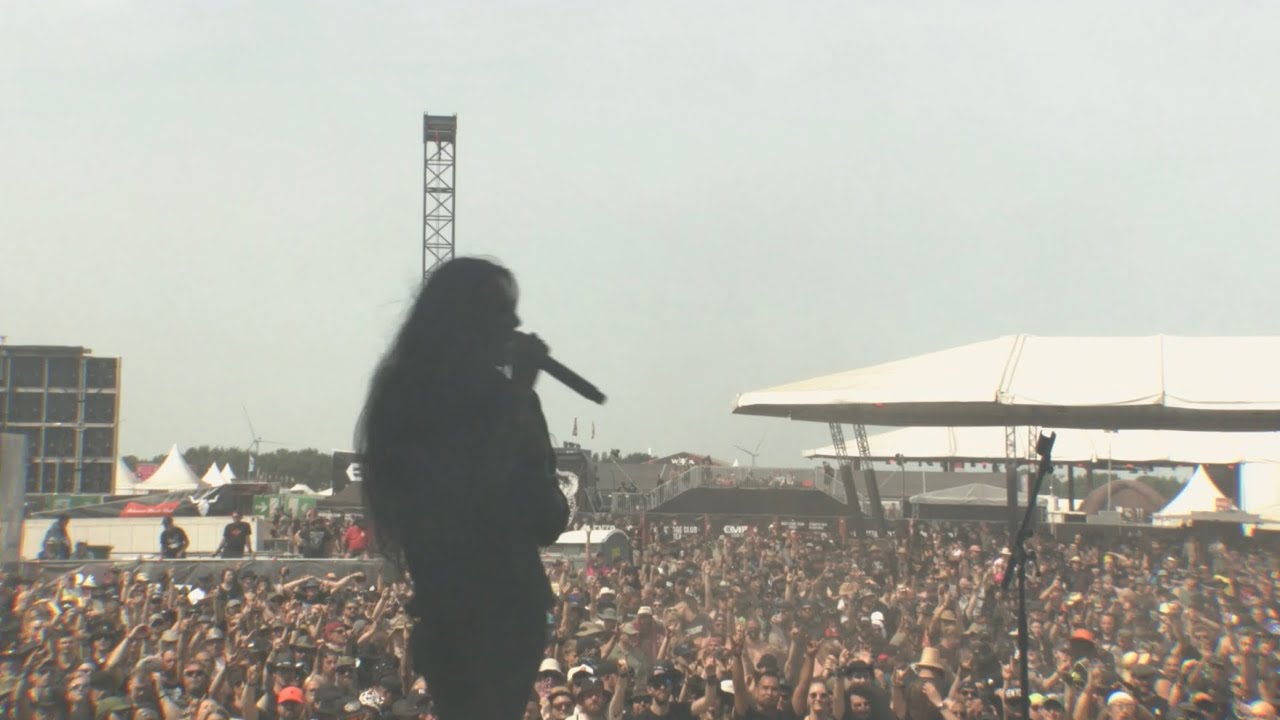

There’s a particular sound in Japanese hardcore that foreign fans usually discover by accident. You go looking for the famous stuff, the names everyone repeats, and then some record with a barely legible logo and a photocopied sleeve ends up in your hands and rearranges your whole idea of what a guitar is supposed to do. Cradle To Grave belong to that category. Not obscure exactly. Just not handed to you.
What hits first is the tone. That scorched, overdriven, almost singing guitar sound that Japanese hardcore has carried for decades — where the distortion is so saturated the notes start bleeding into each other and a riff that should be pure aggression suddenly turns mournful. It’s a weirdly emotional way to play fast music. Cradle To Grave lean into it hard. The riffs bite, then they lift. There’s melody buried in the noise, and it’s never there to soften anything.
Fury with a melody problem
I mean “problem” as a compliment. Plenty of hardcore bands treat a melodic lead as decoration, something to break up the blasting. Here, it feels structural. Songs will hammer along at full tilt and then open up into one of those twin-guitar passages that Japanese bands do better than anyone, the kind that sounds like a metal band that grew up too angry to bother with the solos. Then it’s gone and you’re back in the pit.
The vocals stay raw throughout. No polish, no attempt at a hook. Shouted in a way that suggests the throat is a consumable resource. That’s the right call — when the guitars are doing that much melodic heavy lifting, a clean singer would kill the tension instantly. The rhythm section keeps everything from floating away, blunt and driving, the drums pushing slightly ahead of comfortable.
What I appreciate most is how little the records posture. There’s no big concept, no manifesto in the liner notes as far as I can tell. Songs come in, do their damage, and leave. Most of them are short. Nothing is padded out. It’s the kind of economy that only comes from bands who have played enough small rooms to know exactly when an audience stops listening.
Where it sits in the bigger picture
Japan’s hardcore underground has been remarkably stubborn. While other scenes went through their trend cycles, a whole network of bands here just kept doing the thing — heavy, fast, melodic in that particular scorched way, mostly ignored by mainstream media and completely self-sufficient because of it. Small labels. Small venues. Records that go out in quantities that make collectors insane a decade later.
Cradle To Grave sit inside that lineage comfortably. You can hear the older generation in what they do, but it doesn’t read as homage. The heaviness is a bit more modern, the production a bit less murky, and there’s an edge to the writing that keeps the whole thing from settling into nostalgia. It’s the sound of a band that grew up on those records and then decided to argue with them a little.
For a foreign listener coming in cold, this is honestly one of the easier entry points into the style. The melodic content gives you something to hold onto if you’re coming from metal rather than punk. The speed and rawness give you the actual hardcore experience. It’s a bridge, kind of, though I doubt anyone in the band would describe it that way.
Start with whatever you can find and play it loud enough that the guitars turn into one solid sheet. That’s the intended volume. Anything quieter and you miss the point — the way the harmony sits inside the distortion, the way a riff can be furious and sad in the same bar. Japanese hardcore has been doing that trick for a long time. Cradle To Grave do it well enough that you’ll go hunting for the rest.