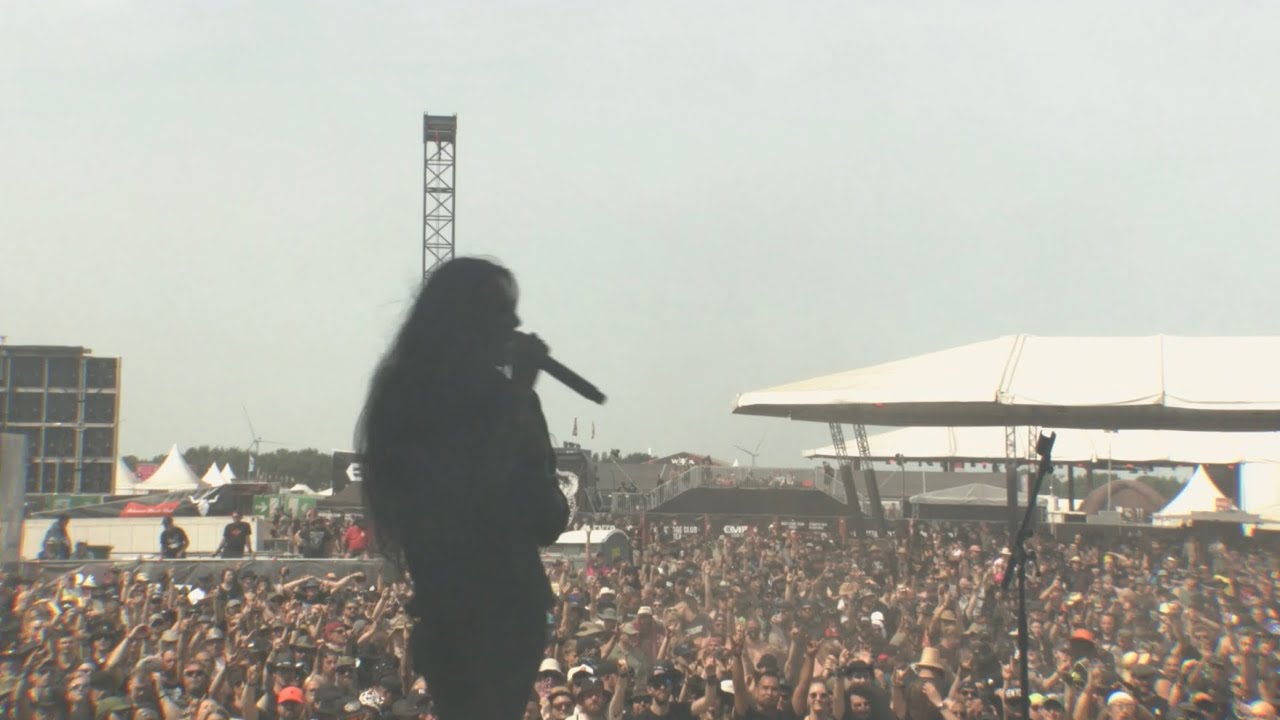

The first time I heard ABRAHAM CROSS it was coming out of a shop stereo in a basement record store, the kind where the guy behind the counter doesn’t look up and the 7-inches are filed by a system only he understands. I didn’t ask what it was for a good two minutes. I just stood there with a stack of records in my hands, not moving, while the drums did that thing — that relentless, galloping, broken-clock d-beat that Japanese bands have been sharpening for decades — and a guitar line came sailing over the top of it like something out of a funeral procession.
That’s the trick with this band, and honestly with the best of Japanese crust generally. The rhythm section is pure punishment. The guitars are grieving.
What the noise actually does
If you’ve come to Japanese hardcore through the usual doors — the frantic, whip-fast stuff, the bands that play a song in ninety seconds and then glare at you — ABRAHAM CROSS is a different weight class. This is crust in the heavy sense. Tempos that pound rather than sprint. Bass distortion thick enough to chew. Vocals that aren’t really delivering lyrics so much as tearing a hole in the middle of the mix for the guitars to pour through.
And the guitars are where it gets good. There’s a melodic instinct running through this music that separates it from the British bands that inspired the whole lineage in the first place. Japanese crust took the Discharge template and then did something strange and lovely with it: added actual melody, actual harmony, twin leads that sound like they were written for a completely different and much sadder record. You get the crushing part and the beautiful part at the same time, and neither one apologises for the other.
Recording-wise, don’t expect polish, and don’t want it. The production sits in that sweet zone where everything bleeds — cymbals washing over the riffs, low end swallowing the room — so the whole thing arrives as one mass of sound rather than a set of separate instruments. People call this “raw” like it’s a limitation. It isn’t. It’s the point. Clean this music up and you’d hear all the individual parts and none of the force.
Why it travels
Japanese hardcore has always exported strangely well, and I think it’s because the bands never really cared about being understood. There’s no gesture toward the international listener, no attempt to soften an edge for anyone. ABRAHAM CROSS works exactly the same way — it’s music made for a small dark room and a PA held together with tape, and it happens to be the case that people in Stockholm and Portland and São Paulo wanted it too.
You can hear the direct lineage. UK anarcho-punk and crust, obviously. The Scandinavian d-beat bands who took the same source material in their own direction. But filter all that through the Japanese hardcore tradition — the one that prizes sheer physical intensity over everything, where a band’s job is to be overwhelming — and you end up somewhere no European band quite arrived at.
Start with whatever you can find and play it loud, because volume is functionally part of the arrangement here. At low volume you get punk. At high volume you get the thing itself: the wall, the smear, the moment where the melody surfaces out of the murk and you realise it’s been there the whole time, buried under all that distortion, waiting.
Split releases and compilations are worth chasing too. That’s how a lot of this scene documented itself — bands sharing a slab of vinyl, no fanfare, sleeves photocopied to the point of illegibility. Half the joy is the hunt.
Put it on in headphones on a night train. It fits the windows going dark better than anything has a right to.